By Dr. Chris Cormier, DC — The Nerve Health Institute, Lafayette, Louisiana
Let me start with the standard I use in clinic, because it is simple and most people have quietly stopped expecting it:
You should wake up rested, get out of bed easily, and have nothing hurt.
That is not an unreasonable ask. That is normal. And when someone tells me they wake up stiff and sore most mornings, I do not treat it as a fact of life — I treat it as information. Their body did not spend the night in a healing place.
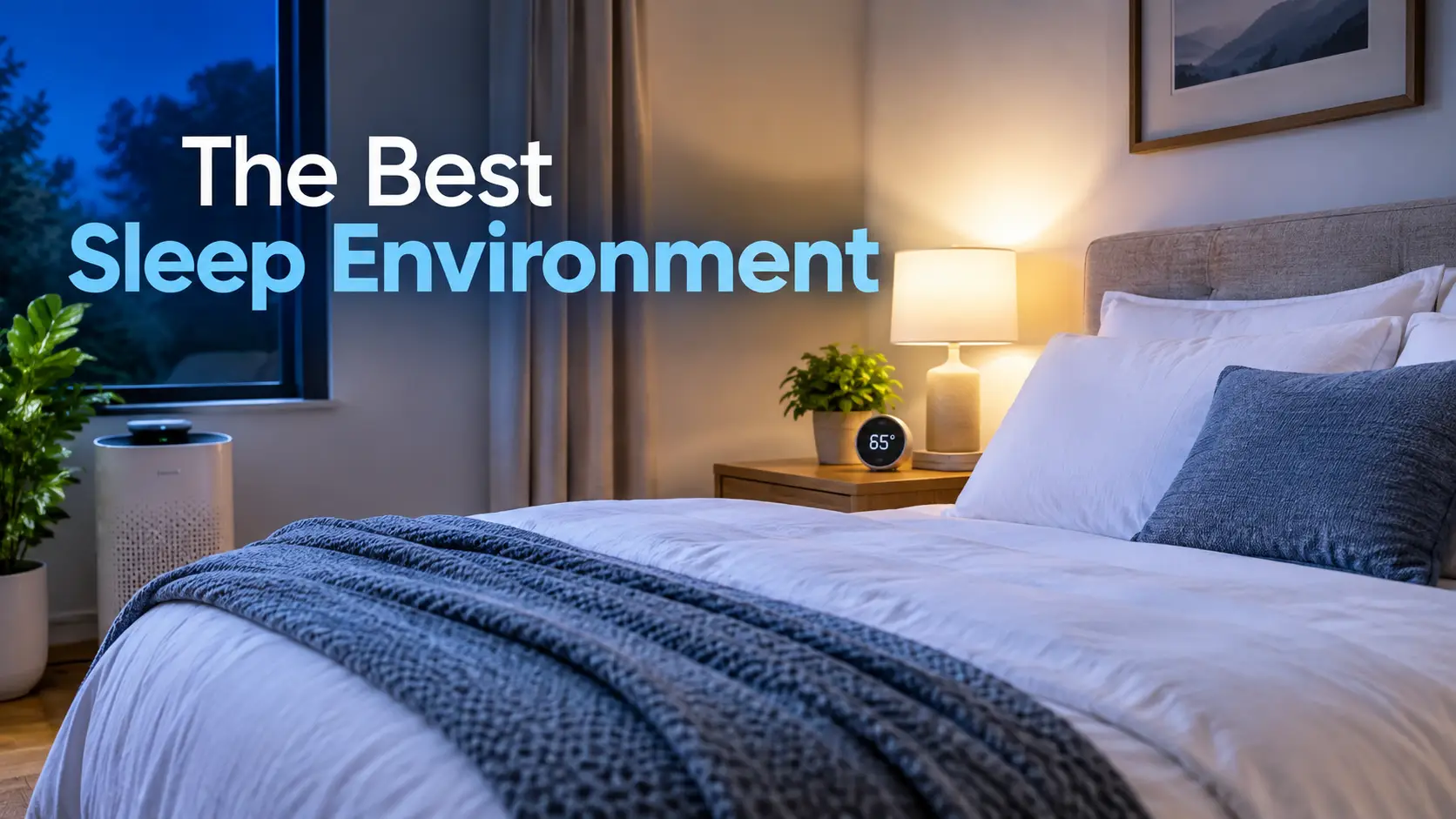
You spend roughly a third of your life in one room, and your body does its most important repair work while you are in it. That makes the room itself a piece of health equipment. Here is how to set it up.
Temperature: help your body do what it is already trying to do
This is the highest-impact change on the list and it costs nothing.
Your core temperature naturally begins to fall about two hours before sleep, alongside melatonin release, and keeps dropping through the night. A cool room supports that drop; a warm room fights it.
Sleep researchers generally recommend a bedroom between 65 and 68°F — around 65°F is often cited as the sweet spot, with a few degrees of personal variation either way. A room that is too warm measurably reduces deep slow-wave sleep, cuts sleep efficiency, increases night-time waking and shortens REM.
Set the thermostat to 68 and work down from there until you find your number. Cool, not cold.
Air: you are going to breathe this for eight hours
Here is something most people never consider. Sleep is an extended breathing session — seven to nine hours of it, in a room that is usually closed.
Oxygen is the first ingredient in every one of your roughly 30 trillion cells, and the worst case for a bedroom is stagnant air that is not circulating at all. Give yourself movement and freshness:
- Crack a window if your climate and neighbourhood allow it, even slightly.
- Run a fan on low for circulation, which also helps with the temperature target above.
- Air the room out during the day — ten minutes with the window open does more than you would think.
- Consider filtration if you are in a dusty area, near a busy road, or dealing with allergies.
Light: your body is reading the room
Your body is designed to transition from light to dark, and that transition is a progression rather than a switch. Going from bright overhead lighting straight to lights-out asks your system to do in a moment what it is built to do over an hour.
So give it the runway. Dim the lights in the last hour. Keep screens low and warm. Then make the room as dark as you can.
And for most bedrooms, total darkness is genuinely difficult — streetlights, standby LEDs, a gap in the curtains. This is why I recommend a sleep mask to almost everyone. It costs very little, it works immediately, and it solves a problem that blackout curtains often only half solve.
The other half of this equation is morning light, which is what actually anchors the whole rhythm — we cover that, along with wake-time consistency, in how to fix your sleep schedule.
What you are actually lying on
The mattress
A lot of people are sleeping on a mattress they bought fifteen or twenty years ago and have simply stopped noticing. If you wake with aches that ease once you are up and moving, the surface is worth examining.
My own preference, and what I recommend most often: buy the firmest mattress you can find, then add a memory foam topper. You get genuine support underneath with the comfort layer on top — and it usually costs less than an expensive mattress that is soft all the way through.
One distinction worth making, because it catches people out. Comfortable and healthy are not the same thing. A surface can feel wonderful as you sink into it and still leave you sore in the morning. The morning is the honest verdict, not the first five minutes.
The pillow
Pillow height matters more than almost anyone realises, and the right height depends entirely on how you sleep.
- Back sleepers need a thinner pillow so the head is not pushed forward and the neck keeps its natural curve.
- Side sleepers need a thicker pillow to fill the gap between ear and shoulder and keep the neck in line with the spine.
Back and side are the two positions I recommend. If you are using the same pillow for both, one of those nights is costing you something — and you can often improvise an improvement tonight with what you already own before buying anything.
Sound and the nervous system
Many people are not short of tiredness — they are short of a nervous system that will let go.
You have two sides. The sympathetic side is the alert, surviving, ready-for-threat side. The parasympathetic side is the calming, healing, digesting, sleeping side. What I want for every patient is both sides strong — the ability to escalate when life demands it and the ability to come all the way back down afterwards.
What we most often see is a very strong sympathetic side and a weak parasympathetic one. People can rev up beautifully and simply cannot come down. Strengthening that second side is a large part of our work, and it is why so many patients report better sleep from treatment aimed at something else entirely.
In the room itself, sound helps. Some people do best with steady background sound to mask disruption; others respond well to specific frequency-based approaches, which we use as supportive therapy and which we have equipment for both in clinic and through the at-home platform.
The phone
Put it in another room, or at least across the room and face down.
The reason is straightforward: alerts, notifications, the glow of the screen, and the simple fact that a phone within arm’s reach is an invitation to check it at 3am. None of that needs a complicated explanation to be worth fixing — if your phone is your alarm, a basic alarm clock costs almost nothing and removes the whole problem.
Plenty of people also like to switch the Wi-Fi off overnight. It is free, it is harmless, and if it helps you feel the house has properly shut down for the night, that is a reasonable thing to want.
The one check worth making if you still wake tired
Here is the most valuable paragraph on this page for a certain group of readers, and I would rather you had it than not.
If you have the temperature right, the room dark, a surface that suits you, and you are still waking unrefreshed after seven or eight hours — that pattern is worth taking seriously, because it often has a specific and very treatable explanation.
Obstructive sleep apnea affects around a billion adults worldwide and the majority of cases go undiagnosed. It is the most common medical cause of excessive daytime sleepiness. The signs worth knowing:
- Loud snoring, particularly if a partner has mentioned it.
- Witnessed pauses in breathing, gasping or choking during sleep.
- Waking unrefreshed despite adequate hours in bed.
- Morning headaches, dry mouth or sore throat.
- Needing to get up to urinate at night — which surprises people, and which we also touch on in our piece on kidney health.
If several of those sound familiar, ask your physician about a sleep study. Home sleep tests make this far easier than it used to be. Getting that diagnosed changes people’s lives — and it is the kind of thing where the whole rest of this article works much better once it is addressed.
How we work on sleep at The Nerve Health Institute
The OWL Method
Our framework is oxygen, water and light, supported by frequency, magnetism and nutrients — and you will notice this entire article is that framework applied to one room. Air quality is oxygen. Hydration through the day is water. Darkness at night and daylight in the morning are light. Sound and frequency work sit in the supporting three.
Water deserves a specific mention here, because people rarely connect it to sleep. Your body is around 60% water, and hydration and mineral balance through the day affect how the night goes. We cover filtering, structuring, hydrogen, and the small additions — a pinch of good salt, organic lemon — in the at-home programme.
The 88-nerve assessment
We map nerve function across 88 major pathways. Sleep quality, autonomic balance and pain travel together more often than most people expect, and the assessment is what lets us aim at the right thing rather than guessing. Our conditions library sets out what we see most often.
Full-body red light therapy
Red and near-infrared wavelengths at a controlled dose. Light is central to how we practise, and dose and timing are the whole argument — details on our full-body red light therapy page.
EBOO
Where circulation and oxygenation are part of someone’s wider picture, extracorporeal blood oxygenation and ozonation is one of the tools we use, within the limits set out at ebooprime.com.
Three things you can change tonight
- Set the thermostat to 68 and work down from there.
- Put on a sleep mask and get the room properly dark.
- Move the phone out of reach and get the air moving.
Then check tomorrow morning against the standard at the top of this article: rested, up easily, nothing hurting. The full at-home system, including the devices and daily practices we recommend, is at BodyCharger.
Frequently asked questions
What is the best temperature for sleep?
Most sleep researchers recommend 65 to 68°F, with around 65°F often cited as optimal and a few degrees of personal variation. Your core temperature falls naturally before and during sleep, and a cool room supports that; a warm room reduces deep sleep and increases waking.
What kind of mattress is best?
My usual recommendation is the firmest mattress you can find with a memory foam topper on it — real support underneath, comfort on top, and typically less expensive than a soft mattress of similar quality. The test is not how it feels when you lie down; it is how you feel when you get up.
How thick should my pillow be?
It depends on your position. Back sleepers want a thinner pillow so the neck keeps its natural curve. Side sleepers want a thicker one to fill the space between ear and shoulder. Back and side are the two positions worth training yourself into.
Why do I wake up sore every morning?
Most often it points to the sleeping surface, pillow height or position — and those are all adjustable. It can also reflect what your nervous system is doing overnight, which is where our assessment comes in. Either way, waking sore is information rather than something to accept.
I sleep eight hours and still feel exhausted. What should I do?
Sort the room first — temperature, darkness, air, surface. If that does not change things, ask your physician about a sleep study, particularly if there is snoring, witnessed pauses in breathing, morning headaches or night-time urination. Obstructive sleep apnea is common, frequently undiagnosed, and very treatable.
Can The Nerve Health Institute help with sleep?
Yes — sleep is one of the most common threads in what we see, because it sits at the junction of autonomic function, pain and recovery. Contact the clinic to discuss your situation.
Book an assessment
If you have the room right and your sleep still is not what it should be, that is worth looking at properly. Contact The Nerve Health Institute and we will map out where to start.
Dr. Chris Cormier, DC
Founder, The Nerve Health Institute — Lafayette, Louisiana
At-home programmes at bodycharger.com. More on how and why I practise this way at drchriscormier.com.
Spark your cells to optimal longevity.