By Dr. Chris Cormier, DC — The Nerve Health Institute, Lafayette, Louisiana
Somebody reads about hyperbaric oxygen therapy, decides it sounds right for them, books a consultation — and is told they are not a candidate.
That conversation happens more often than people expect, and it tends to land as a door closing. It usually is not one, and this page is about what sits on the other side of it.
First: the chamber is genuinely good
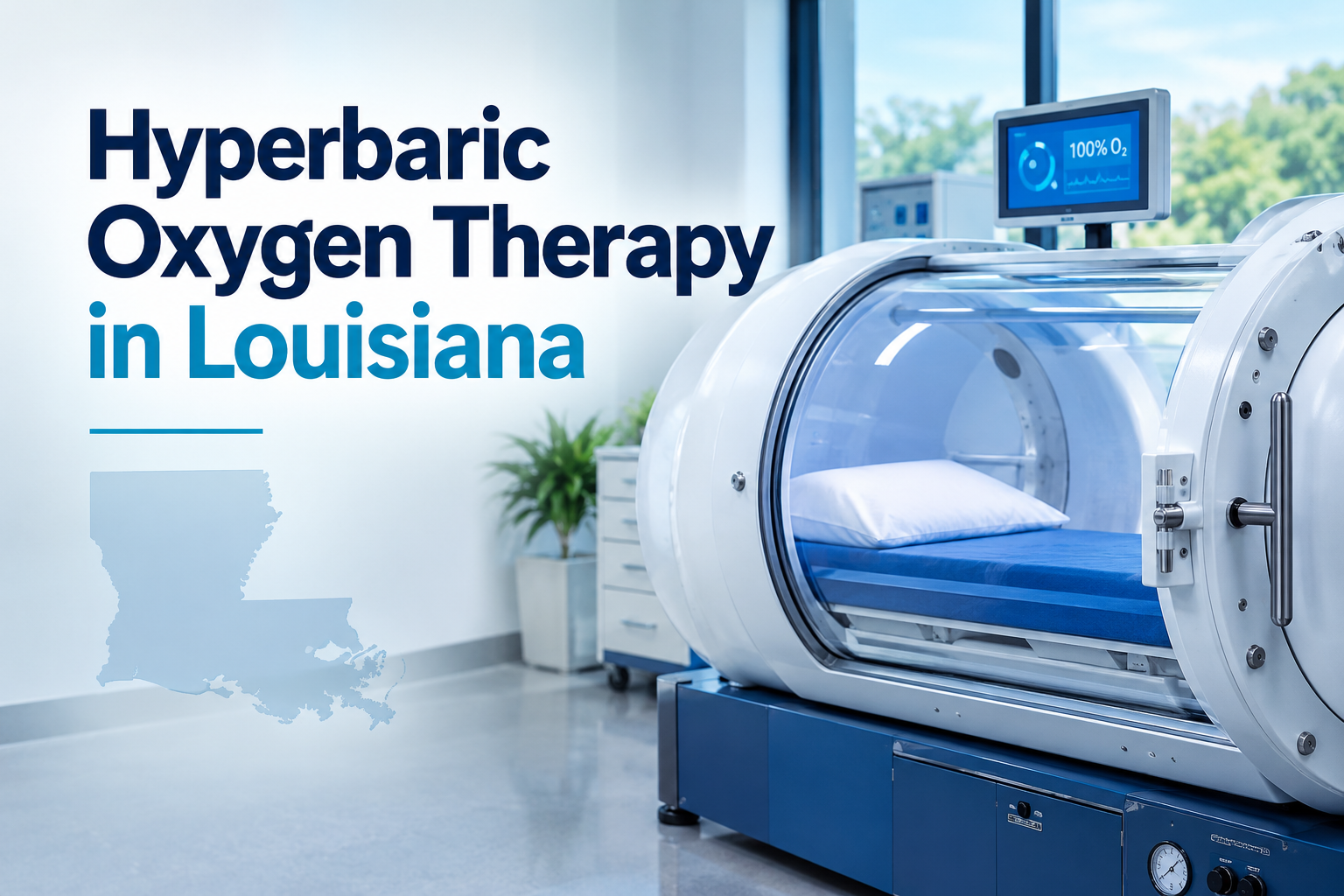
Nothing here is a criticism of hyperbaric oxygen therapy. It is an established treatment with real regulatory standing and a specific list of conditions it is cleared for — difficult-to-heal wounds, carbon monoxide poisoning, decompression sickness, radiation damage, gas gangrene, sudden unexplained hearing loss and others. We have set that out in full, with the screening, at hyperbaric oxygen therapy in Louisiana.
The point is simply that a treatment can be excellent and still be wrong for a particular person — and the reasons are usually mechanical rather than medical.
Why somebody might not be a candidate
The commonest reasons have nothing to do with how unwell anybody is.
Ears and sinuses
This is the big one. The pressure change has to be managed through the middle ear, and some people cannot equalise comfortably — because of Eustachian tube problems, fluid in the ears, previous ear surgery, or simply an anatomy that does not cooperate. A current cold or sinus infection does it too, though that one resolves on its own.
Mobility
Getting in and out of a chamber is a physical business. For somebody with limited mobility, a transfer difficulty, or paralysis, the barrier is the furniture rather than the therapy — which is a frustrating reason to miss out on something and a completely real one.
Claustrophobia
Very common, entirely understandable, and worth saying out loud early rather than discovering at depth. Some people manage it with preparation and some would simply rather not, and both are fine.
The clinical screening list
The clinical literature sets out a real list that needs assessing first — an untreated pneumothorax is the one absolute contraindication, with COPD and asthma, recent eye or brain surgery, epilepsy, heart failure, insulin-dependent diabetes, several medications and every implanted device all requiring proper assessment. Some of those mean no. Many of them mean not yet, or not without a conversation first.
What else exists
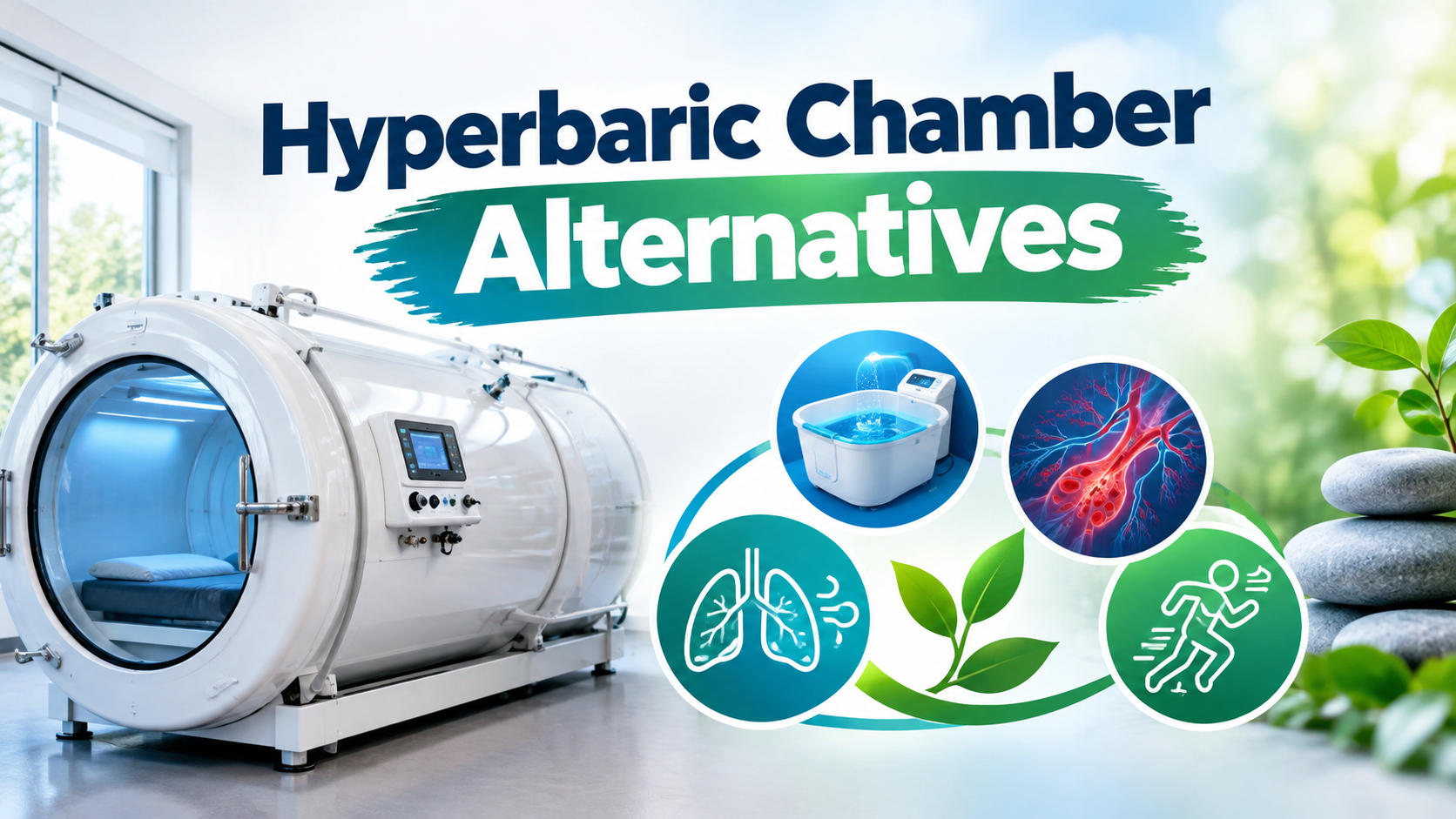
If the chamber is out, the useful question is which part of the oxygen chain you are actually trying to influence — because the alternatives are not lesser versions of a chamber, they are different tools. EBOO Prime has written the category overview if you want the whole landscape.
Circulation-focused approaches
A chamber raises how much oxygen is dissolved and available. Circulation decides where it actually goes, which is a separate constraint and often the more relevant one. That is the territory of EBOO therapy, which involves no pressure and no enclosed space.
Oxygenated water immersion
We also use a device that oxygenates water, with the feet and lower legs immersed while you sit comfortably in a normal chair.
What it offers is accessibility rather than intensity. There is no pressure to tolerate, no enclosure, no transfer in and out of anything, and people who found the chamber impossible generally find this straightforward. Sessions are quiet and most people read or talk through them.
We would describe it honestly as a comfortable, low-barrier option rather than an equivalent to a cleared hyperbaric indication — and if a chamber is the right treatment for your condition, we will tell you so rather than substituting.
Breathing, which costs nothing
Easy to dismiss, and the one everybody can do today. Better breathing improves efficiency and mechanics rather than dramatically changing blood saturation, and movement does more for actual delivery than any technique — the practical version is at BodyCharger.
The thing nobody selling oxygen tells you
More is not automatically better, and I would rather you heard that from us.
Oxygen is a dose, not a quantity. There is such a thing as too much, and the people most at risk of it are the enthusiastic.
Oxygen toxicity is a recognised risk of hyperbaric treatment, with pulmonary complications and seizures among the possible consequences. That is precisely why protocols exist, why sessions are time-limited, and why anyone offering unlimited access to oxygen should prompt a question rather than excitement.
The goal is sufficiency, not saturation. A clinic that talks about dosing is a clinic that understands what it is handling.
What we can and cannot measure
Worth being straight about this, because it is where a lot of marketing gets loose.
A pulse oximeter measures oxygen saturation in blood passing through your finger. It is useful and it is not the same as knowing how well oxygen is reaching tissue in a particular place. There is no routine clinical test that maps oxygen cell by cell — that would be genuinely useful and it does not currently exist.
What that limitation does not license is the conclusion that everybody is therefore deficient. In a healthy person, blood oxygen saturation sits near the top of its normal range, and anyone telling you otherwise without measuring anything is guessing. What varies between people is delivery and demand, which is a more interesting question and the one worth assessing properly.
How we actually decide
In order, and the order matters.
We take a full history and ask for everything you take, with doses — EBOO Prime has written about why the things people leave out matter most. We work out which part of the chain looks limiting for you specifically. We sort the free and well-evidenced things first, because they make everything after them easier to interpret. And then, if something is still worth doing, we talk about which tool and why.
If you want nerve function measured rather than estimated, that is our 88-nerve assessment, and the broader picture of how the brain governs these systems is in how the brain controls the body. The framework underneath all of it is the OWL Method — oxygen, water and light, in that order.
What we do not do
- We do not claim any oxygen therapy treats conditions it is not cleared for. The cleared list is published on our hyperbaric page.
- We do not offer more oxygen as a general good. It is dosed, and too much is a real thing.
- We do not substitute a comfortable option for an appropriate one. If the chamber is what your condition calls for, that is what we will say.
- We do not ask you to choose. Keep every appointment you have.
And if you are weighing up whether you need any of this at all, I have written about that honestly — the fundamentals usually come first, and that is not a brush-off.
Frequently asked questions
What are the alternatives to a hyperbaric chamber?
It depends what you are trying to influence. Circulation-focused approaches such as EBOO involve no pressure or enclosure. Oxygenated water immersion is a comfortable, low-barrier option requiring no pressure tolerance. And breathing and movement cost nothing and affect delivery more than people expect.
Why can’t I use a hyperbaric chamber?
Most often ears — difficulty equalising, fluid, previous ear surgery or a current cold. Other common reasons are limited mobility making transfer difficult, claustrophobia, or something on the clinical screening list such as untreated pneumothorax, COPD, recent eye or brain surgery, epilepsy, heart failure or an implanted device. Many of these mean not yet rather than never.
Is more oxygen always better?
No. Oxygen toxicity is a recognised risk, with pulmonary complications and seizures among the possible consequences, which is why protocols are time-limited. Oxygen is a dose rather than a quantity, and sufficiency is the goal rather than saturation.
Can a pulse oximeter tell me if my cells need more oxygen?
No. It measures saturation in blood passing through your finger, which is useful but different from tissue-level oxygen. No routine clinical test maps oxygen cell by cell. In a healthy person saturation sits near the top of its normal range, so anyone claiming you are deficient without measuring anything is guessing.
Is the water-based option as good as a chamber?
They are different things and we would not present them as equivalent. The water-based option offers accessibility — no pressure, no enclosure, no difficult transfer. If your condition calls for a cleared hyperbaric indication, we will say so rather than substituting something more comfortable.
I was turned away elsewhere. Is it worth asking again?
Often yes, because many reasons are temporary or specific to one modality. A cold resolves. A chamber being unsuitable says nothing about whether a pressure-free option is. Bring whatever you were told, including the reason, and we will tell you honestly what we think.
If you were told no
Bring the reason with you. A great many of them are temporary, or specific to one piece of equipment rather than to you.
See what we work with on our conditions page, or get in touch and we will give you a straight answer — including if that answer is that you do not need any of it.
Dr. Chris Cormier, DC
The Nerve Health Institute — Lafayette, Louisiana
At-home protocols at bodycharger.com. Circulation and oxygenation at ebooprime.com. More on how I practise at drchriscormier.com.
Spark your cells to optimal longevity.