Dr. Chris Cormier, DC — The Nerve Health Institute, Lafayette, Louisiana
Hyperbaric By oxygen therapy has become far better known in the last few years, and most of what people have read about it falls into two camps: it does everything, or it does nothing.
It is neither, and the accurate version is more useful than either. This page sets out what it actually is, what it is cleared for, and what a reputable chamber will check before it puts anyone inside one.
What a session actually involves
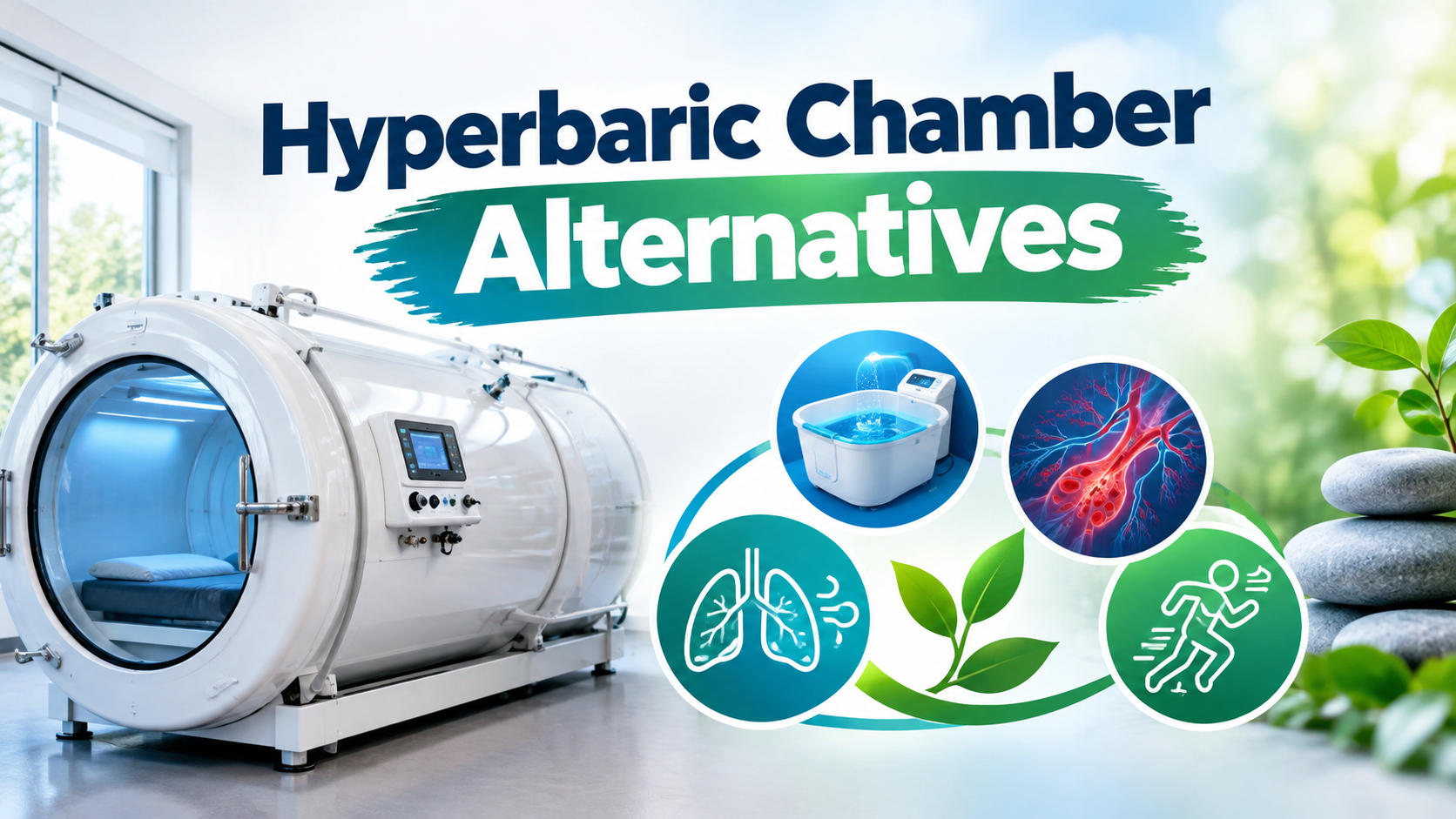
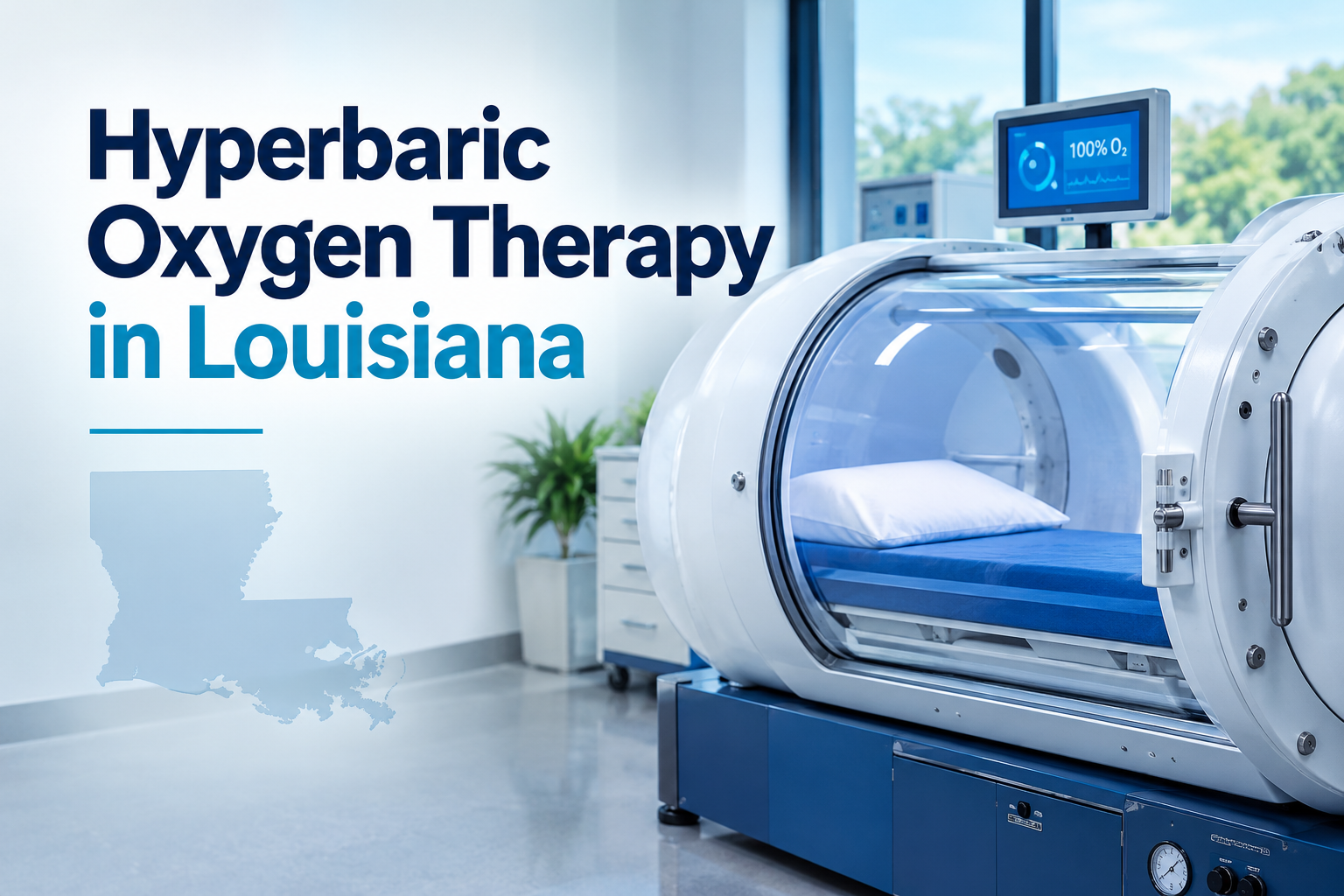
You lie in a sealed chamber, the pressure inside is raised above normal atmospheric pressure, and you breathe pure oxygen while you are in there.
Harvard Health describes the standard arrangement: chamber pressure raised to as much as two and a half times normal air pressure, 100% oxygen, in a single-person chamber or sometimes a room holding several people. A typical session runs ninety minutes to two hours. Some conditions call for a single session and others for repeated sessions over days or weeks.
The sensation people notice is in the ears — pressure on the way down, and a pop on the way out. That is the same mechanism as descending in an aircraft, and it is the part we spend the most time preparing people for.
Why pressure changes anything
Ordinarily, almost all the oxygen you carry is bound to haemoglobin in your red blood cells, and that system is close to full most of the time.
Raising the pressure while you breathe pure oxygen does something different: it increases the amount of oxygen dissolved directly in the blood plasma, which is the fluid rather than the cells. That dissolved oxygen can reach tissue that circulation struggles to serve well — which is precisely why the cleared uses cluster around wounds, damaged tissue and gas in the bloodstream.
It also matters at the cellular level, because mitochondria — the structures that produce most of your usable energy — require oxygen to do it. The full background on why oxygen delivery matters is at EBOO Prime, and how the brain governs the systems that move it around is in how the brain controls the body.
One fact worth stating correctly
You will often see it said that oxygen is the single most abundant element in the human body by mass, at around 65%. That is true, and it is genuinely striking.
It is worth being precise about what it means, though. Most of that oxygen is chemically bound — the majority of it inside water, which makes up most of your body, plus the oxygen within proteins, fats and carbohydrates. It is not a reservoir of oxygen gas waiting to be topped up. The oxygen that matters minute to minute is the oxygen you are breathing and delivering right now, which is a different thing and the thing worth looking after.
What hyperbaric oxygen therapy is cleared for
We publish this list rather than summarise it, because it is the most useful thing on the page.
Per Harvard Health, the FDA-cleared uses are:
- Wounds that are difficult to heal, such as diabetic foot ulcers
- Infections and swelling
- Severe, large burns
- Frostbite
- Gas gangrene
- Air and gas bubbles in blood vessels
- Sudden, unexplained hearing loss
- Carbon monoxide poisoning
- Decompression sickness in divers
- Damage from radiation given to treat conditions such as cancer
- Severe anaemia when blood transfusions cannot be used
Insurance, including Medicare, generally covers hyperbaric oxygen therapy when it is used for one of those conditions.
For anything outside that list, the honest position is that the clearance is not there — and you should expect any chamber you approach to tell you so plainly. Harvard notes specifically that some centres promote it for conditions where the FDA has not cleared it. We think the right response to that is to show you the list and let you hold us to it.
Where that leaves general wellness use
People come to us feeling tired, foggy, or slower to bounce back than they used to be, and they ask whether a chamber would help.
Here is the straight answer. That is not one of the cleared indications, and we will not tell you it is. What we will do is talk through what is actually going on, start with the things that are free and well-evidenced — sleep, breathing, daylight, movement — and be honest about where a chamber might sit and where it would not. The foundations we build everything on are the OWL Method: oxygen, water and light.
If the first thing a clinic offers you is the most expensive thing it owns, that is worth noticing.
A lot of people arrive having already decided they want the chamber. The conversation we would rather have is about whether it is the right thing, for you, at this point — which sometimes it is, and sometimes it is not yet. EBOO Prime has written up the questions worth asking before any procedure, and they apply to us exactly as much as to anyone else.
Screening: what we check, and why
This is the part most marketing skips, and it is the part that matters most.
The absolute one
The clinical literature is clear that an untreated pneumothorax — a collapsed lung — is the one absolute contraindication. It has to be treated before anybody goes into a chamber.
Lungs and airways
COPD, asthma, and any history of thoracic surgery, spontaneous pneumothorax, or asymptomatic lesions on imaging all need discussing first. An active chest or sinus infection means waiting, not proceeding carefully.
Ears and sinuses
This is the commonest practical issue by a wide margin. Difficulty equalising, Eustachian tube problems, previous ear surgery and current congestion all matter, because the pressure change has to be managed through the middle ear.
The good news is that most of it is a teachable skill. We spend time on equalising technique before anybody descends, and we go slowly. Nobody should ever be pushing through ear pain in a chamber — if it hurts, we stop and come back up. That is standard practice and you should expect it anywhere.
Eyes, neurology and general health
Recent eye surgery involving trapped gas, glaucoma, epilepsy, recent brain surgery, uncontrolled high fever, heart failure, and insulin-dependent diabetes all appear in the literature as things to assess properly rather than wave through. So does claustrophobia, which is common, entirely understandable, and worth raising early rather than discovering at depth.
Medication
Several medications interact with hyperbaric treatment and need to be known about in advance — which is why we ask for everything you take, with doses, rather than a summary.
Implanted devices
Many modern implants are pressure-rated, and that is genuinely good news. It does not mean any given device is fine. Every implant gets checked individually against its own manufacturer’s limits, every time. That includes pacemakers, pumps and anything else in place — and if we cannot confirm it, we do not proceed until we can.
Facility standards, which are not optional
High oxygen concentration creates a fire risk, which is why the FDA recommends receiving hyperbaric oxygen therapy only at an accredited facility. Harvard states that plainly, and we would say it louder.
Ask any chamber you are considering — including ours — about accreditation, who supervises sessions, and what the protocol is if something is uncomfortable partway through. A good answer is immediate and specific.
Where this sits alongside what else we do
A chamber is one tool. It sits alongside EBOO therapy on the circulation side, our 88-nerve assessment for measuring nerve function properly rather than estimating it, and the rebuilding work we do with people coming back from long illness — written up in recovering from tuberculosis.
Which of those is right for you is a conversation, not a menu.
Frequently asked questions
What is hyperbaric oxygen therapy?
You lie in a sealed chamber, the pressure is raised to as much as two and a half times normal atmospheric pressure, and you breathe 100% oxygen. Harvard Health puts a typical session at ninety minutes to two hours, in a single-person chamber or a multi-person room. Raising the pressure increases the oxygen dissolved directly in blood plasma, which can reach tissue that circulation serves poorly.
What conditions is it cleared to treat?
Difficult-to-heal wounds such as diabetic foot ulcers, infections and swelling, severe large burns, frostbite, gas gangrene, air and gas bubbles in blood vessels, sudden unexplained hearing loss, carbon monoxide poisoning, decompression sickness, radiation damage, and severe anaemia where transfusion cannot be used. Insurance including Medicare generally covers it for those uses.
Will it help with tiredness or brain fog?
Those are not cleared indications and we will not tell you otherwise. We would start with the free, well-evidenced things — sleep, breathing, daylight, movement — and talk honestly about where a chamber might sit and where it would not.
Who should not have hyperbaric oxygen therapy?
An untreated pneumothorax is the one absolute contraindication. Many other things require proper assessment first, including COPD and asthma, ear or sinus problems and active infections, recent eye or brain surgery, epilepsy, heart failure, insulin-dependent diabetes, certain medications, and any implanted device. Claustrophobia is worth raising early.
Does it hurt?
The main sensation is ear pressure, like descending in an aircraft, with a pop on the way out. Equalising is a teachable skill and we cover it before anybody descends. Nobody should push through ear pain — if it hurts, the session stops and we come back up.
Can I have it with a pacemaker or implant?
Many modern implants are pressure-rated, but that is checked device by device against the manufacturer’s own limits, every time. If it cannot be confirmed, we do not proceed until it can.
Do I need an accredited facility?
Yes. High oxygen concentration creates a fire risk, and the FDA recommends treatment only at an accredited facility. Ask about accreditation, supervision, and the stop protocol — anywhere you go, including here.
If you are considering a chamber in Louisiana
Come and ask us the hard questions. We will show you the cleared list, tell you honestly whether you are a candidate, and say so if the answer is not yet.
See what we work with on our conditions page, or get in touch.
Dr. Chris Cormier, DC
The Nerve Health Institute — Lafayette, Louisiana
At-home protocols at bodycharger.com. Circulation and oxygenation at ebooprime.com. More on how I practise at drchriscormier.com.
Spark your cells to optimal longevity.